

Performance & Usage Telemetry: Store Astrato activity in Google BigQuery
This approach creates a query history layer on top of BigQuery using the built-in INFORMATION_SCHEMA.JOBS_BY_PROJECT and JOBS_BY_USER views. It captures executed SQL statements, execution metadata, and performance metrics, and makes them queryable as a structured dataset.
Unlike aggregated monitoring tools, this method provides row-level visibility into historical queries, which can be enriched with Astrato metadata embedded in SQL comments. This enables direct correlation between BigQuery workload, users, dashboards, and business activity.
How does it work
Section titled “How does it work”Astrato appends metadata to the end of each query, subsequently allowing this to be viewed in BigQuery. BigQuery already contains data about which database user has accessed each table, warehouse etc.
In this article we will cover how to store this data in a new database, using only one block of code.
The data that Astrato appends is shown below.
-- {"objectId":"f4ed7820-9884-45ba-b078-86fc260d5511","sheetId":"3c2fa835-05ce-47f8-9489-3b99a76adc0b","workbookId":"d8ccb7b8-970e-477f-a093-6e862a431e21"}To supplement this, you can export the lookup associating workbooks, sheets and users, from the administration section https://app.astrato.io/administration/exports.
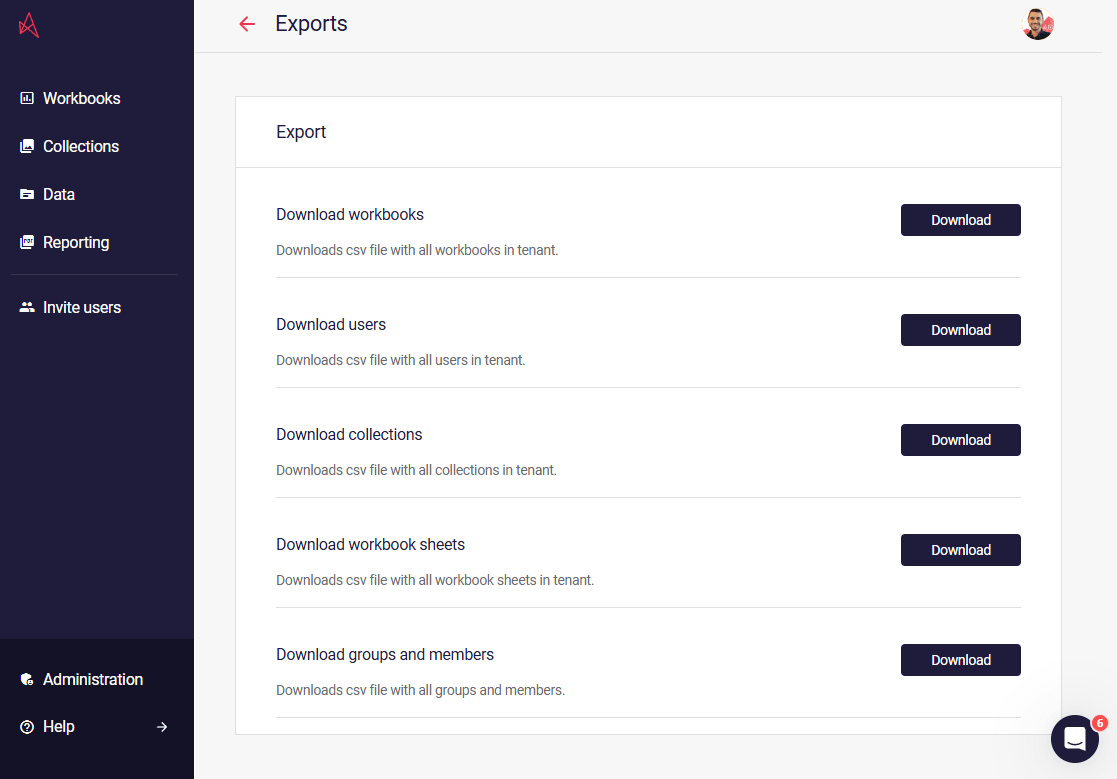
Currently, this is a manual upload for security purposes, since user data contains PII. The tables can be directly uploaded to BigQuery. These tables/exports from Astrato are required to determine the names of users, workbooks and groups.
-- 2) Create the history table (partitioned by creation_time)CREATE TABLE IF NOT EXISTS `ASTRATO.query_history` ( -- job metadata job_id STRING, project_id STRING, user_email STRING, creation_time TIMESTAMP, start_time TIMESTAMP, end_time TIMESTAMP, state STRING, statement_type STRING, priority STRING, total_bytes_processed INT64, total_bytes_billed INT64, total_slot_ms INT64, cache_hit BOOL, error_reason STRING, error_message STRING, query_text STRING, -- raw labels (keep for debugging / future keys) labels ARRAY<STRUCT<key STRING, value STRING>>, -- flattened Astrato labels astrato_type STRING, -- labels: type astrato_user_id STRING, -- labels: user_id role_type STRING, -- labels: role_type object_id STRING, -- labels: object_id sheet_id STRING, -- labels: sheet_id workbook_id STRING, -- labels: workbook_id workbook_state STRING, -- labels: workbook_state -- optional: capture field/dimension label keys like f1, d1, d2 as arrays of values -- (keeps your screenshot data usable without hardcoding a max count) field_keys ARRAY<STRING>, -- keys matching f\d+ field_values ARRAY<STRING>, -- corresponding values dimension_keys ARRAY<STRING>, -- keys matching d\d+ dimension_values ARRAY<STRING> -- corresponding values)PARTITION BY DATE(creation_time)CLUSTER BY user_email, workbook_id, sheet_id, object_id;-- 3) Incremental upsert from INFORMATION_SCHEMA (past 8 days by default)MERGE `ASTRATO.query_history` TUSING ( WITH src AS ( SELECT job_id, project_id, user_email, creation_time, start_time, end_time, state, statement_type, priority, total_bytes_processed, total_bytes_billed, total_slot_ms, cache_hit, error_result.reason AS error_reason, error_result.message AS error_message, query AS query_text, labels FROM `region-eu`.INFORMATION_SCHEMA.JOBS_BY_PROJECT WHERE job_type = 'QUERY' AND state = 'DONE' AND statement_type != 'SCRIPT' AND creation_time BETWEEN TIMESTAMP_SUB(CURRENT_TIMESTAMP(), INTERVAL 8 DAY) AND CURRENT_TIMESTAMP() -- Only keep jobs that have Astrato labels (choose the key that’s guaranteed for you) AND EXISTS ( SELECT 1 FROM UNNEST(labels) l WHERE l.key IN ('workbook_id','sheet_id','object_id','user_id','type') ) ), flattened AS ( SELECT s.*, -- Core Astrato metadata MAX(IF(l.key = 'type', l.value, NULL)) AS astrato_type, MAX(IF(l.key = 'user_id', l.value, NULL)) AS astrato_user_id, MAX(IF(l.key = 'role_type', l.value, NULL)) AS role_type, MAX(IF(l.key = 'object_id', l.value, NULL)) AS object_id, MAX(IF(l.key = 'sheet_id', l.value, NULL)) AS sheet_id, MAX(IF(l.key = 'workbook_id', l.value, NULL)) AS workbook_id, MAX(IF(l.key = 'workbook_state', l.value, NULL)) AS workbook_state, -- Dynamic “f#” and “d#” keys (e.g. f1, d1, d2) ARRAY_AGG(IF(REGEXP_CONTAINS(l.key, r'^f\d+$'), l.key, NULL) IGNORE NULLS ORDER BY l.key) AS field_keys, ARRAY_AGG(IF(REGEXP_CONTAINS(l.key, r'^f\d+$'), l.value, NULL) IGNORE NULLS ORDER BY l.key) AS field_values, ARRAY_AGG(IF(REGEXP_CONTAINS(l.key, r'^d\d+$'), l.key, NULL) IGNORE NULLS ORDER BY l.key) AS dimension_keys, ARRAY_AGG(IF(REGEXP_CONTAINS(l.key, r'^d\d+$'), l.value, NULL) IGNORE NULLS ORDER BY l.key) AS dimension_values FROM src s LEFT JOIN UNNEST(s.labels) l GROUP BY job_id, project_id, user_email, creation_time, start_time, end_time, state, statement_type, priority, total_bytes_processed, total_bytes_billed, total_slot_ms, cache_hit, error_reason, error_message, query_text, labels ) SELECT * FROM flattened) SON T.job_id = S.job_idWHEN MATCHED THEN UPDATE SET project_id = S.project_id, user_email = S.user_email, creation_time = S.creation_time, start_time = S.start_time, end_time = S.end_time, state = S.state, statement_type = S.statement_type, priority = S.priority, total_bytes_processed = S.total_bytes_processed, total_bytes_billed = S.total_bytes_billed, total_slot_ms = S.total_slot_ms, cache_hit = S.cache_hit, error_reason = S.error_reason, error_message = S.error_message, query_text = S.query_text, labels = S.labels, astrato_type = S.astrato_type, astrato_user_id = S.astrato_user_id, role_type = S.role_type, object_id = S.object_id, sheet_id = S.sheet_id, workbook_id = S.workbook_id, workbook_state = S.workbook_state, field_keys = S.field_keys, field_values = S.field_values, dimension_keys = S.dimension_keys, dimension_values = S.dimension_valuesWHEN NOT MATCHED THEN INSERT ( job_id, project_id, user_email, creation_time, start_time, end_time, state, statement_type, priority, total_bytes_processed, total_bytes_billed, total_slot_ms, cache_hit, error_reason, error_message, query_text, labels, astrato_type, astrato_user_id, role_type, object_id, sheet_id, workbook_id, workbook_state, field_keys, field_values, dimension_keys, dimension_values ) VALUES ( S.job_id, S.project_id, S.user_email, S.creation_time, S.start_time, S.end_time, S.state, S.statement_type, S.priority, S.total_bytes_processed, S.total_bytes_billed, S.total_slot_ms, S.cache_hit, S.error_reason, S.error_message, S.query_text, S.labels, S.astrato_type, S.astrato_user_id, S.role_type, S.object_id, S.sheet_id, S.workbook_id, S.workbook_state, S.field_keys, S.field_values, S.dimension_keys, S.dimension_values );Example “business questions” queries
-- a) Most expensive workbooks by bytes processed (last 7 days)SELECT workbook_id, SUM(total_bytes_processed) AS bytes_processed, COUNT(*) AS query_countFROM `ASTRATO.query_history`WHERE creation_time >= TIMESTAMP_SUB(CURRENT_TIMESTAMP(), INTERVAL 7 DAY) AND workbook_id IS NOT NULLGROUP BY workbook_idORDER BY bytes_processed DESC;-- b) Slowest sheets by average elapsed time (end-start) (last 7 days)SELECT sheet_id, AVG(TIMESTAMP_DIFF(end_time, start_time, MILLISECOND)) AS avg_ms, COUNT(*) AS query_countFROM `ASTRATO.query_history`WHERE creation_time >= TIMESTAMP_SUB(CURRENT_TIMESTAMP(), INTERVAL 7 DAY) AND sheet_id IS NOT NULL AND start_time IS NOT NULL AND end_time IS NOT NULLGROUP BY sheet_idORDER BY avg_ms DESC;-- c) Queries by Astrato user (last 30 days)SELECT astrato_user_id, COUNT(*) AS queries, SUM(total_bytes_processed) AS bytes_processedFROM `ASTRATO.query_history`WHERE creation_time >= TIMESTAMP_SUB(CURRENT_TIMESTAMP(), INTERVAL 30 DAY) AND astrato_user_id IS NOT NULLGROUP BY astrato_user_idORDER BY bytes_processed DESC;